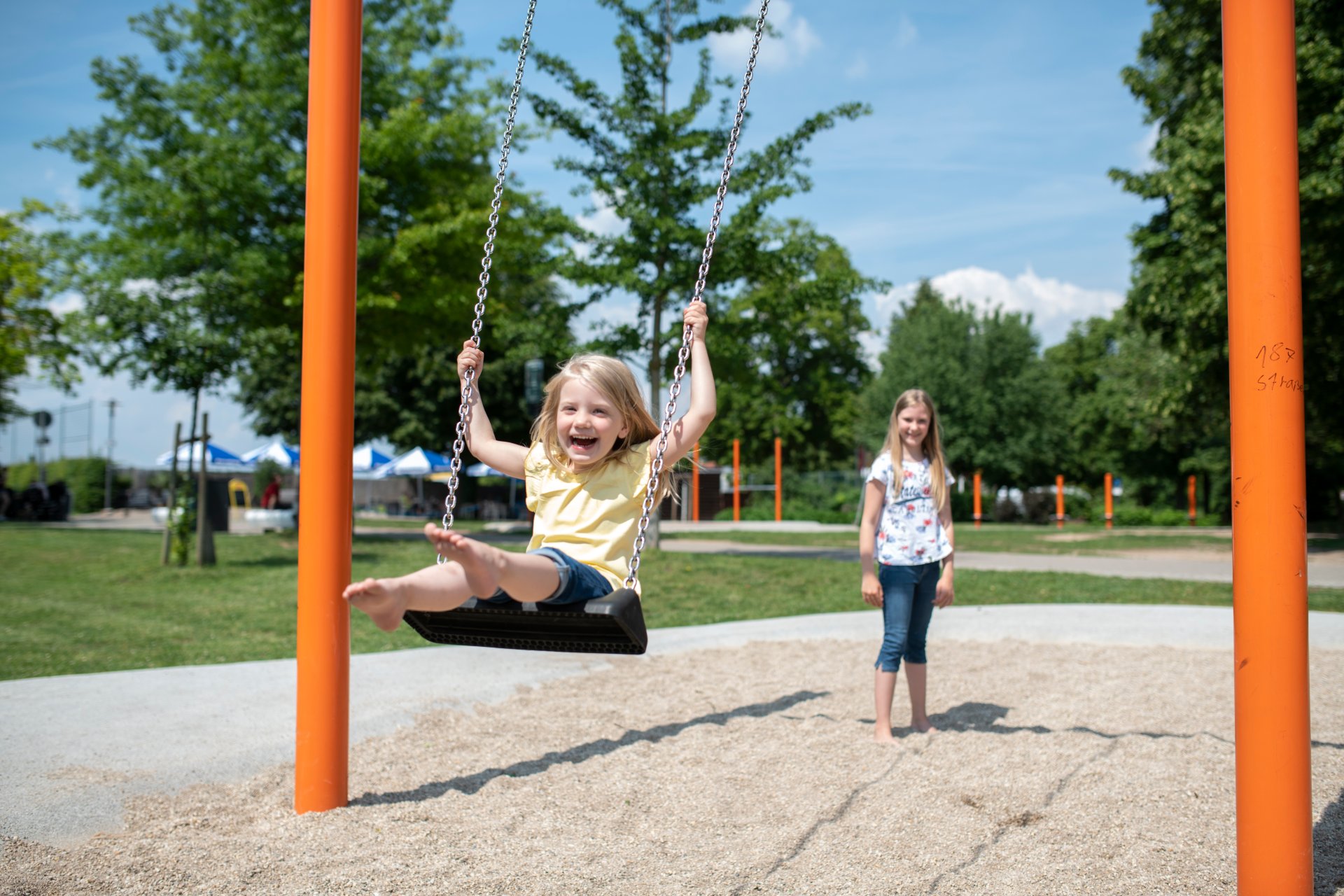
As a large district town, Kitzingen is now home to people from more than 100 nations. With currently 4364 children, around 18% of the population is under the age of 18. Even if every 5th person in Kitzingen is under the age of 18, the demographic change is also evident in a town like Kitzingen. In proportion, there are more old people than children and young people. This can lead to an imbalance in the formation of political opinion because children and young people - unlike senior citizens - do not have the right to vote.
The interests of children and young people should be heard directly and permanently. In addition, young people need opportunities to learn how to participate. To this end, we need to provide young people with more information about how a municipality works and expand and secure participation structures. Above all, we need to make participation and democracy a practical experience for young people in their everyday lives.
Measure 1 | Play guidance planning | Status: started
Play guidance planning is a long-term and comprehensive planning instrument. It focusses on the entire residential environment of children and young people. With the participation of children and young people, it aims to secure the quality and quantity of play, adventure and recreational areas in a structural and sustainable manner, to eliminate areas of fear by creating islands of help and to ensure safe traffic routes. An external planning office is used for the implementation.
The city administration provides the necessary resources for implementation in the relevant departments of the building authority, public order office and youth work. The city council decides to commission an external office to support the creation of the concept and provides the necessary funds totalling approximately €25,000. Future participation processes for planning and construction projects are also bindingly defined as part of the play guidance plan.
Measure 2 | Child-friendly transport planning | Status: starting soon
To ensure the well-being of children in road traffic, neighbourhood-based participation events are held with pupils from all types of schools. An analysis of current cycling, walking and school routes is carried out and any necessary alternatives are developed. Different age groups are to be equally involved.
Measure 3 | Traffic concept in front of schools | Status: in the middle / starting soon
Decision-makers from politics and administration define guidelines on how to deal with the excessive volume of traffic at pick-up and drop-off times in front of schools. In accordance with the guidelines, information material may be produced, campaigns carried out or traffic management solutions developed and implemented.
Measure 4 | Coordination routines within the administration | Status: in the middle
Topics relevant to children and young people are cross-cutting issues in many areas of the administration. For successful decision-making and participation processes, the binding involvement of all administrative staff and good coordination between those responsible are therefore important. A coordination system is being developed with the help of which politicians, top management and departments can structurally safeguard the cross-cutting issue of children's rights.
A checklist for "Consideration of the best interests of the child in administrative proceedings" will be introduced. Processes are reviewed and adapted accordingly.
Measure 5 | Provision of sufficient resources | Status: in the middle / difficult
Sufficient human resources are required to implement children's rights as a cross-cutting issue. The city administration provides these human resources on a permanent basis and expands them where necessary.
Measure 6 | Co-signature requirement for resolutions | Status: starts soon / difficult
The City Council adopts a resolution on the co-signatory requirement for draft resolutions (e.g. by the youth welfare officer or another person) to check that the interests of children and young people are taken into account and to safeguard children's rights.
Measure 7 | Children and Youth Office | Status: CHECK!
A written concept for the children's and youth centre will be drawn up. The children and youth office will be integrated into the new youth centre as an easily accessible contact point. The issues raised there will be passed on to the relevant administrative departments or political bodies by the city youth worker and dealt with there. The children and youth office is also the city's ombudsman's office.
Measure 8 | Concept development for child and youth participation | Status: in the thick of it
In order to consolidate participation processes and structures in Kitzingen, a comprehensive concept for child and youth participation is being developed and binding quality standards for participation processes are being defined. As participation is a cross-cutting issue that affects various areas of administration, administrative staff are also involved in the development process alongside young people.
Measure 9 | Youth survey | Status: in the middle
Youth surveys are carried out at regular intervals in order to monitor young people's satisfaction and to incorporate their concerns, wishes and suggestions into upcoming planning and decision-making processes at an early stage.
Measure 10 | Political education through school excursions to the town hall | Status: CHECK!
Young people are regularly invited to the town hall by the Lord Mayor or political representatives.
The workings of local politics and current issues are explained to young people. Those in positions of responsibility from politics and administration meet young people here in direct dialogue at eye level.
Measure 11 | Expansion and promotion of the youth app | Status: difficult
The youth app is increasingly being expanded and advertised for information and dialogue offerings. Relevant content is regularly developed and expanded with young people.
Measure 12 | Results from participation and evaluation processes | Status: in the middle / difficult
To ensure the well-being of children in road traffic, neighbourhood-based participation events are held with pupils from all types of schools. An analysis of current cycling, walking and school routes is carried out and any necessary alternatives are developed. Different age groups are to be equally involved.
Measure 13 | Concept for publicising children's rights | Status: in the middle
A concept/measure to make children's rights visible to the public is adopted and implemented.
How do you become a child-friendly municipality?
The "Child-friendly municipality" seal is awarded by the "Kinderfreundliche Kommunen e.V." association. Each municipality goes through an individual programme with defined steps.
First, the town council must pass a resolution stating that the town wishes to become a child-friendly community. On 11 March 2021, Kitzingen Town Council resolved that the town of Kitzingen should apply for the ‘Child-Friendly Community’ seal.
This is followed by an assessment of the current situation. A survey is being conducted to identify the municipality’s strengths and weaknesses. Kitzingen already has a good, modern infrastructure. Schools, nurseries and sports halls are being built, extended and renovated to meet the challenges of the times. Kitzingen has an attractive outdoor and indoor swimming pool and will invest 9.5 million euros next year in the construction of a youth and family centre. Children and young people in the municipality will also be consulted directly. The results will be incorporated into the assessment.
The evaluation of the analysis and the children’s survey has resulted in specific recommendations for action, which have been set out in an action plan. The action plan sets out specific measures for implementing children’s rights. The Kitzingen Town Council approved the implementation on 4 May 2023.
The municipality is awarded the seal following an assessment of its action plan by the association "Kinderfreundliche Kommunen e.V.". On 23 September 2023, our mayor, Stefan Güntner, was presented with the "Child-Friendly Municipality of Kitzingen" seal.
Each local authority has three years to implement the action plan. The implementation involves the participation of children and young people. The association will then carry out a further review.